In short: how often you eat sugar matters more than how much, because every exposure restarts an acid attack that lasts around 20 minutes. Frequent sipping and grazing are worse for teeth than the same quantity at one sitting. Acidic drinks erode enamel directly, and cheese, water and fibrous vegetables help the mouth recover between meals.
The saying "you are what you eat" applies to teeth more literally than it applies to most of the body. Enamel is not living tissue. It cannot repair itself the way skin or bone does, so what it meets in a day — sugar, acid, saliva, minerals — decides whether it is slowly dissolving or slowly rebuilding.
How Diet Affects Your Oral Health
Frequency, not quantity, is the variable that moves
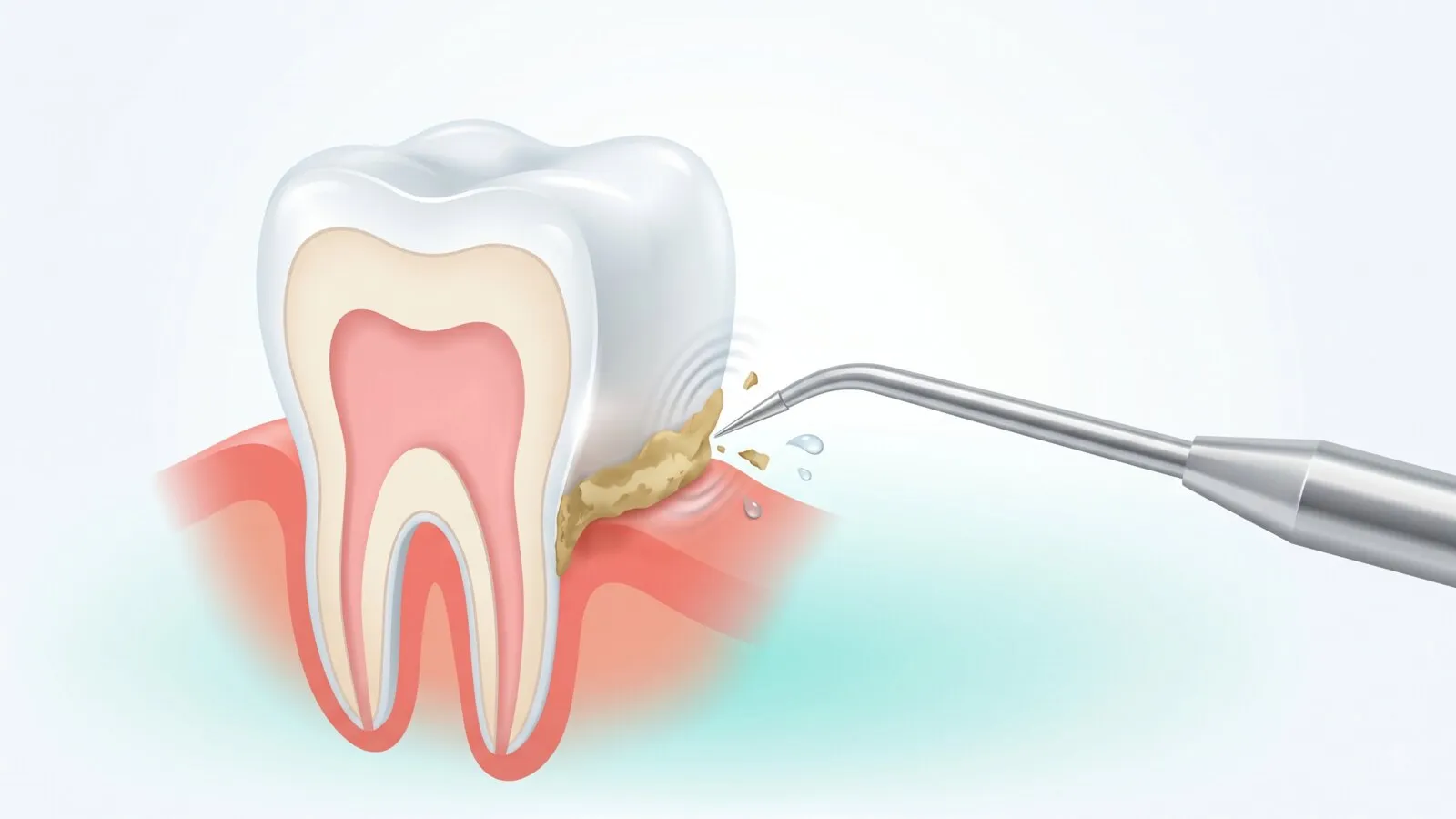
This is the single most useful thing on the page, and it is the thing patients are told least often. Bacteria in plaque turn fermentable carbohydrate into acid within minutes. The acid drops the pH at the tooth surface below the point where enamel starts to dissolve, and saliva then takes roughly twenty minutes to bring it back up. One dessert is one drop and one recovery. The same amount of sugar taken in six sips across an afternoon is six drops and six recoveries, and the tooth spends far more of the day below the line.
That is why the evidence on sugar and decay is about patterns rather than totals. The systematic review commissioned to inform the World Health Organization's guideline found consistent evidence of lower decay where free-sugars intake stayed below 10% of energy, and lower still below 5% — but it also found the relationship holds across populations with very different eating patterns, which is what makes the timing advice practical rather than moralising. A ten-year update to that review reached the same conclusion on a larger body of studies.
Bedtime is the worst moment for a sugar exposure, and this is separately evidenced rather than folklore: a systematic review of free-sugar consumption specifically around bedtime found it associated with more decay in children, independently of total intake. Saliva flow falls during sleep, so the last exposure of the day is the one with the least protection behind it.
Tooth Structure and Development
Calcium and phosphorus form the mineral of enamel, and vitamin D helps the body absorb them. This matters most while teeth are forming — during pregnancy and early childhood — and much less afterwards. No adult rebuilds a cavity by drinking milk. What dairy does for an adult tooth is more modest and more immediate: it raises the pH at the tooth surface and supplies the calcium and phosphate that let a partly softened surface reharden.
Gum Health
Vitamin C is needed for the collagen that holds gum tissue together, and severe deficiency causes bleeding gums. The everyday version of that link is weaker but measurable — a large population study found lower dietary vitamin C associated with higher risk of periodontal disease, with the risk concentrated at genuinely low intakes rather than spread evenly across the range. Dairy intake shows a similar pattern in older adults. Neither finding makes a supplement a treatment for gum disease. Gum disease is treated by removing the deposits that cause it.
Which Foods Are Good for Your Teeth?
Crunchy Fruits and Vegetables
Apples, carrots and celery need chewing, and chewing is what produces saliva. Saliva is the mouth's own buffer: it dilutes acid, carries calcium and phosphate back to the enamel surface, and physically clears debris. Calling them "natural toothbrushes" oversells it — they do not clean between teeth and they do not remove plaque — but the saliva they provoke is real and it is free.
Dairy Products
Cheese, milk and yoghurt supply calcium and phosphate and raise pH. Cheese at the end of a meal is one of the few pieces of dietary dental advice that is both easy and well supported.
Leafy Greens and Water
Greens carry the vitamins gum tissue needs and require chewing. Plain water is the one drink that does nothing bad at all: it dilutes acid, it carries no sugar, and in most of Lahore it is what people already have on the table.
Which Foods Damage Your Teeth?
Sugary Foods and Beverages
Bacteria convert sugars into acids that attack enamel. Hard candies, soft drinks and sticky sweets are the worst offenders, and for the same three reasons each time: they are sugary, they stay in the mouth a long time, and they tend to be consumed on their own rather than with a meal.
Acidic Foods and Drinks
Acid dissolves enamel directly, without needing bacteria to do the work. Citrus and citrus juices, carbonated drinks — including the sugar-free ones, which are still acidic — vinegar-based pickles and sports drinks are the usual sources. A systematic review of dietary acids in adolescents found that how a drink is consumed changes the damage as much as what is in it: sipping, swishing and holding a drink in the mouth all increase erosion for the same volume. Coffee and tea stain far more than they erode; the sugar people put in them is the bigger problem.
One practical rule that almost nobody is told: enamel stays softened for a while after an acid exposure, so do not brush straight afterwards. Rinse with plain water, wait about an hour, then brush.
Which Everyday Pakistani Habits Matter Most for Teeth?
The advice above holds everywhere. These are the specific patterns that do the most damage here, and most of them are about timing rather than quantity:
- Sweetened chai, sipped through the day. This is the big one. Four or five cups spread across a working day is four or five separate acid attacks of roughly twenty minutes each; the same amount of sugar taken at one sitting does considerably less harm. The fix is not necessarily less sugar — it is fewer separate occasions, with water in between.
- Mithai, especially in wedding and Eid season. Sticky sweets pack into the grooves of the back teeth and keep feeding bacteria long after the plate has been cleared. Eat them with a meal rather than on their own, and rinse with water afterwards.
- Sugarcane juice, soft drinks and packaged juices. Sugar and acid arriving together, usually sipped slowly — which is the worst possible delivery method for both.
- Sweetened supari and paan. Beyond the tobacco risk they carry, these are sugary and abrasive, and they are held in the mouth for long stretches — sometimes tucked in the cheek overnight, which is about the worst thing you can do to the teeth on that side.
- Eating late and going to bed unbrushed. Saliva flow drops during sleep, so whatever is left on your teeth at bedtime sits there undiluted for hours. If you only brush properly once a day, make it the last thing at night.
What Does This Look Like in a Lahore Household?
Most of the diet advice patients have already read was written for a Western eating pattern of three meals and little in between. That is not how a working day runs in Johar Town. Chai arrives on a tray whenever a guest does; a school child is handed a juice box at the gate; the evening meal often lands after nine. None of that has to change for teeth to improve, and telling people to stop drinking chai is advice nobody follows.
What does work is bundling. Sugar taken with a meal costs one acid attack instead of a new one, so the mithai after dinner does less damage to teeth than the mithai at four o'clock. A glass of water beside the chai shortens each exposure. A child's sweet given at the end of lunch, rather than as a mid-afternoon reward, removes an entire exposure from the day without removing the sweet. And the last thing that touches the teeth before bed should be a toothbrush, not a snack.
When we see a patient in Lahore whose brushing looks genuinely good and whose cavities keep coming anyway, the pattern above is almost always the reason — and it is only ever found by asking someone to talk through an ordinary day out loud, hour by hour, including what they drink while they work.
What Eating Habits Protect Your Teeth?
- Limit snacking between meals so saliva has time to neutralise acid
- End meals with tooth-friendly foods like cheese or nuts
- Chew sugar-free gum with xylitol after meals when brushing is not possible
- Stay well hydrated, primarily with plain water
- Keep sugar with meals rather than between them — the single change with the largest effect
Good nutrition works best alongside the rest of the routine — brushing, cleaning between the teeth, and check-ups at whatever interval your risk calls for. If cavities keep appearing despite reasonable brushing, diet timing is usually the missing piece, and it is worth going through a normal day out loud with your dentist — our preventive care team can build dietary guidance around what you actually eat.
Sources
- Moynihan PJ, Kelly SA. Effect on caries of restricting sugars intake: systematic review to inform WHO guidelines. Journal of Dental Research. 2014;93(1):8–18 — the review commissioned to inform the World Health Organization's free-sugars guideline.
- Moores CJ, Kelly SAM, Moynihan PJ. Systematic Review of the Effect on Caries of Sugars Intake: Ten-Year Update. Journal of Dental Research. 2022;101(9):1034–1045.
- Baghlaf K, Muirhead V, Moynihan P, Weston-Price S, Pine C. Free Sugars Consumption around Bedtime and Dental Caries in Children: A Systematic Review. JDR Clinical and Translational Research. 2018;3(2):118–129 — bedtime exposure, examined separately from total intake.
- Chan AS, Tran TTK, Hsu YH, Liu SYS, Kroon J. A systematic review of dietary acids and habits on dental erosion in adolescents. International Journal of Paediatric Dentistry. 2020;30(6):713–733 — drinking habit changes erosion for the same volume of drink.
- Nishida M, Grossi SG, Dunford RG, Ho AW, Trevisan M, Genco RJ. Dietary vitamin C and the risk for periodontal disease. Journal of Periodontology. 2000;71(8):1215–1223 — an association, not a treatment effect; the risk sits at genuinely low intakes.
- Adegboye AR, Christensen LB, Holm-Pedersen P, Avlund K, Boucher BJ, Heitmann BL. Intake of dairy products in relation to periodontitis in older Danish adults. Nutrients. 2012;4(9):1219–1229 — observational; diet is one of many things that differ between the groups compared.