Short answer: the fear is real, and it is aimed at the wrong surface. No study has measured enamel being lost from scaling in a living patient — the enamel changes that laboratory work can detect on extracted teeth are measured in nanometres and micrometres, and the researchers who report them say so themselves. What laboratory studies do measure being removed is on the root surface below the gum line, which is softer, thinly covered, and not the shiny outer surface people picture. And the amount removed depends far more on the state of the instrument tip, the force used and how long it is applied than on scaling as such.
If you believe that scaling se daant kamzor ho jate hain — that a cleaning wears the teeth down and leaves them loose — you are in a great deal of company, and it is not a foolish belief. In a 2024 survey of 400 medical and dental students in Peshawar, 28.5% believed scaling loosens teeth. In a separate 2024 study of 310 dental patients in Pakistan, 24.2% considered scaling a harmful procedure — and those authors put the blame not on patients but on clinicians: "lack of communication and patient education about the transient outcomes of dental scaling were the primary factors that led to these myths and misconceptions". This article is an attempt to fix our half of that.
What does a scaling appointment actually remove?
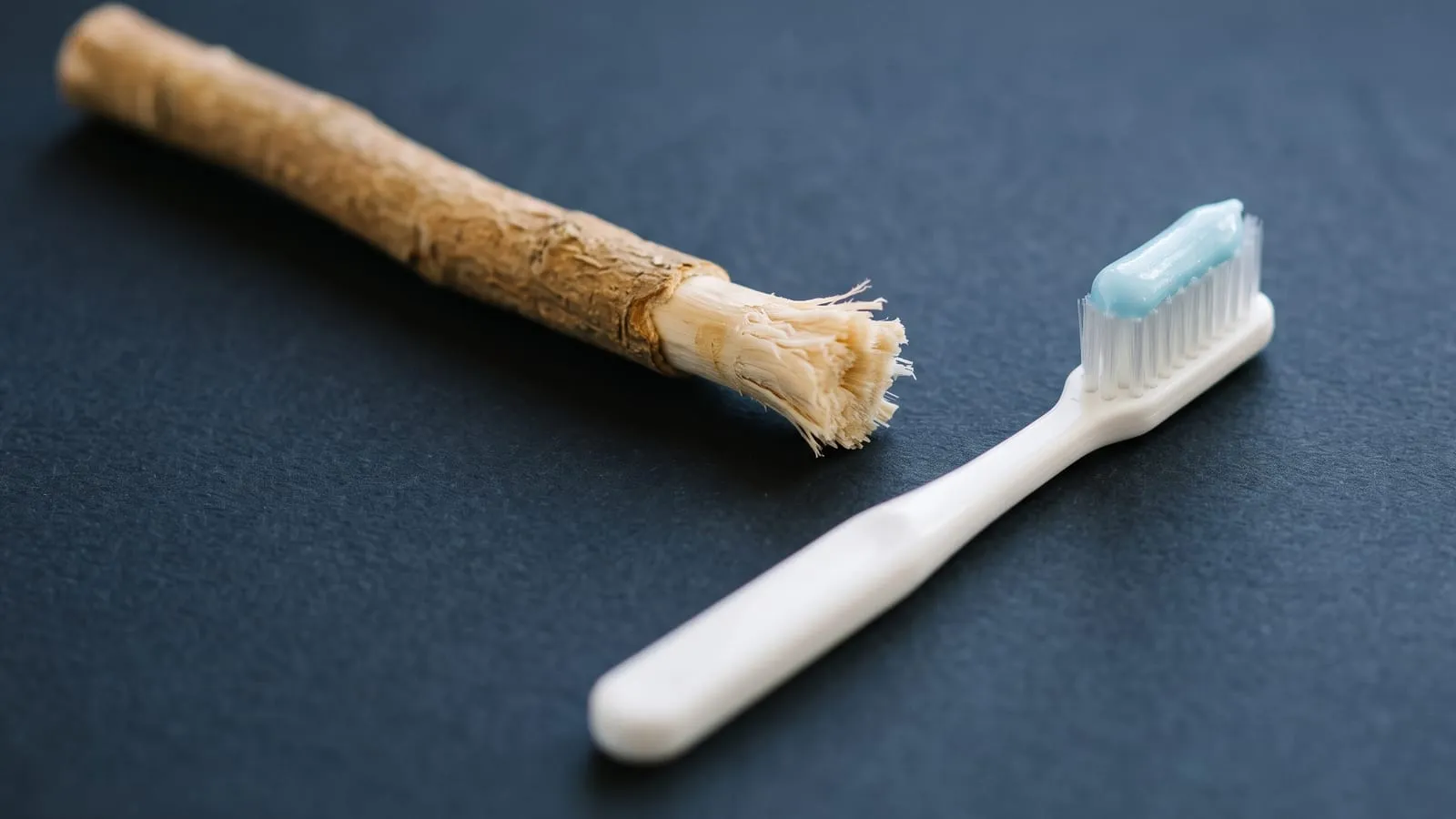
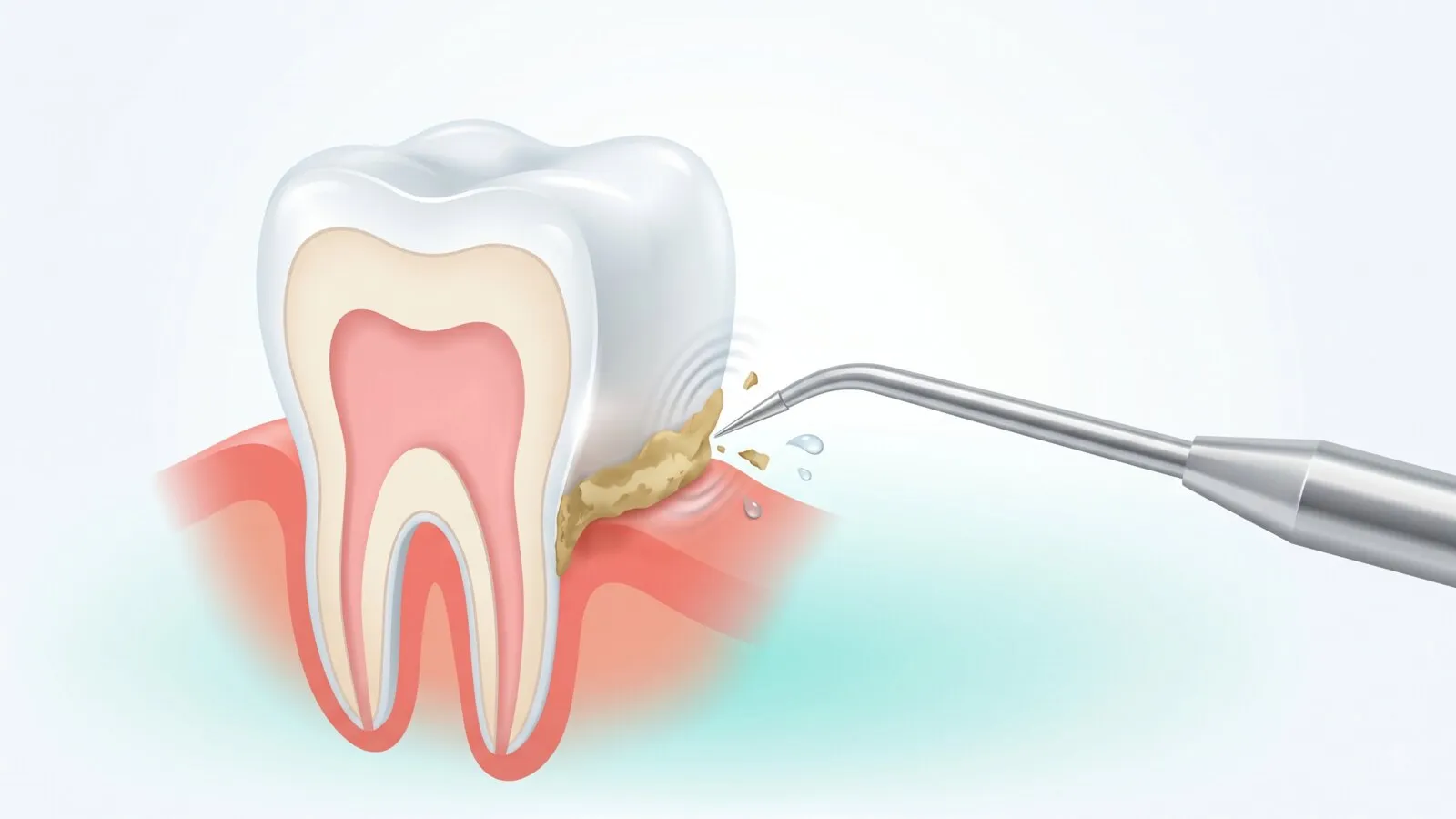
It removes a deposit that sits on the tooth, not a layer of the tooth. Plaque is the soft bacterial film that forms daily and comes off with a brush. Left alone, minerals from saliva harden it into calculus — tartar — which is cemented onto the surface and often hides below the gum margin. Once that has happened, neither a brush nor a chewing stick shifts hardened deposit, and neither does any home remedy.
Two details matter for everything that follows. First, tartar forms on the tooth rather than becoming part of it, which is why an instrument can work on the deposit. Second, tartar above the gum line sits on enamel, while tartar below it sits on the root — and those are different materials. Enamel is the hardest tissue in the body; the root is covered by a thin layer called cementum and, under that, dentine, both considerably softer. Almost every argument about "scaling damage" collapses once those two surfaces are separated. For the visit itself described step by step, see what a scaling and polishing appointment involves.
Does scaling remove a layer of enamel?
No study has measured enamel loss from scaling in a living patient — and the laboratory studies that measure enamel at all find changes at a scale that needs a microscope to see. That is a different statement from "it cannot happen", and we are not making the stronger one; it describes what has and has not been looked for.
The most sensitive measurement available comes from a 2023 laboratory study using atomic force microscopy on 40 sections of extracted premolars: enamel roughness after ultrasonic scaling averaged 57.1 nanometres against 32.1 after hand scaling, a statistically significant difference (p = 0.034). Fifty-seven nanometres is roughly six hundredths of one micrometre, and the authors state plainly that because the study was in vitro, "the outcome of this study cannot be applied directly to clinical situations".
A larger in-vitro study, using profilometry on 99 extracted molars, found enamel roughness rose from 1.01 to 1.18 micrometres after ultrasonic scaling — a change that did not reach statistical significance (p = 0.058). A 2026 review gathering this work concluded that instrumentation does alter dental hard tissues to varying degrees, while stating that "the clinical relevance of these findings remains uncertain, as the evidence was primarily laboratory-based". It also notes something easy to miss: the teeth in these studies were free of decay and structural defects, which is not true of every mouth.
Measurable surface change on enamel exists in the laboratory; a layer of enamel being removed from a patient's tooth by scaling has never been demonstrated, and has not really been studied in patients at all.
How did we weigh the evidence?
That distinction — what a laboratory measures against what happens in a mouth — runs through the whole question, so it is worth setting out the kinds of proof before going further. Writing on this subject tends to present all of them at the same volume and end in a blanket reassurance. We have kept them apart, and every claim in this article says which one it rests on:
- Randomised trials and systematic reviews in patients — the strongest evidence here, and the basis for everything said about gum treatment, sensitivity and tooth survival.
- Laboratory (in vitro) studies on extracted teeth — where nearly all the tooth-surface measurements come from. They tell you what an instrument does to a tooth in a clamp. They do not tell you what happened in your mouth.
- Animal studies — one matters here, and it is old and very small. It is labelled every time it appears.
- Observational cohorts — people followed over years, not randomly assigned. They show direction and association, never proof of cause.
- Clinical convention — what dentists are taught and do. Reasonable, widely agreed, and not the same thing as a trial.
Where the evidence is thin, or points somewhere less comfortable, we say so rather than rounding it up. Two sections of this article exist entirely for that purpose.
Then why do studies measure tooth-surface loss?
Because they are measuring the root surface below the gum, not the enamel crown — and that surface genuinely does give up small amounts of material to instruments. This is the part of the fear that has something behind it, and hiding it would make the rest less believable.
The figures everyone quotes come from a 1991 laboratory study that gave 90 extracted incisors twelve standardised working strokes each, then measured what had come off the root:
- Ultrasonic scaler — 11.6 micrometres of root substance on average, in vitro, at that fixed stroke count.
- Hand curette — 108.9 micrometres on average, in the same in-vitro test — a comparison of instruments under fixed laboratory conditions, not a finding about which is better in a patient.
Those are measurements of root, not enamel, on teeth outside a mouth under a stroke count no appointment applies, so they compare instruments rather than describe a cleaning. A 2026 review reports similar findings from more recent work, with hand instrumentation preserving the least cementum and air polishing the most.
Worth noticing which way that points: the ultrasonic scaler — the buzzing device patients are most suspicious of — removed roughly a tenth of what the hand curette removed. But it would be wrong to turn a laboratory measurement into advice about instruments, and, as the next section explains, clinical results with the two approaches are hard to tell apart.
Is ultrasonic scaling safe, and how does it compare with hand scaling?
Reviews of randomised trials in patients have not found a meaningful difference in gum-treatment outcomes between ultrasonic and hand instruments — and where small differences appear, they slightly favour hand instruments, which is the opposite of the usual worry about the machine. "No significant difference" is not the same as proven equivalence, and neither review claims it is.
A 2020 systematic review and meta-analysis of 18 randomised trials found no statistically significant difference in attachment gain at three or six months, and reported that ultrasonic instruments took significantly less time; the authors' wording is that "similar results may be expected", with a call for studies at lower risk of bias. A second 2020 review, of 10 randomised trials, found hand instruments reduced pocket depth slightly better in medium and deep pockets, with no difference in attachment level at medium depths and none between the two methods in gum recession — on evidence its authors graded moderate at best. The gaps are fractions of a millimetre, and too small to choose a clinic over.
If you have a pacemaker or an implanted defibrillator, tell your dentist before any appointment so equipment can be positioned accordingly. A 2020 systematic review of 18 studies found laboratory tests detected interference very close to the device lead, while in patients no interference altering device function was detected at normal clinical distances and settings — but the step that matters is simply telling them.
Why do teeth feel loose after a heavy cleaning?
Because heavy tartar is rigid, and removing it removes that rigidity — while the measured looseness of teeth generally improves after gum treatment rather than worsening. The sensation is real; what it means is different from what it feels like it means.
The idea that instrumentation traumatises already-mobile teeth has been tested directly. A randomised trial of 29 patients with periodontitis split mandibular front teeth into three groups — scaling and root planing alone, or with splinting before or after. The group receiving scaling and root planing on its own was the only one to show a reduction in mobility at three months (1.67 ± 0.55 Periotest units), and the authors concluded that "mechanical manipulation of mobile teeth during periodontal treatment did not affect clinical outcome negatively". Splinting first, specifically to prevent instrumentation trauma, gave no advantage.
What explains the feeling, then? The usual clinical explanation is that thick deposit bridging the spaces around and between teeth acts as a rigid splint, so its removal lets teeth move as much as their own supporting bone allows. That is standard clinical reasoning rather than a trial finding — no study has taken a set of calculus-splinted teeth and measured the change in mobility caused by removing the deposit.
The uncomfortable half of the answer is that in some mouths the support really has been lost. Periodontitis destroys the bone around the roots, silently and usually painlessly, long before a tooth wobbles, so a tooth that is genuinely mobile after a cleaning is one whose bone the disease had already taken while the deposit masked it. That is a reason to have the gums assessed, not a reason to avoid the next cleaning.
Why do black triangles and gaps appear once the tartar is gone?
Because the space was already there — occupied by hardened deposit and by swollen gum tissue that shrinks back to its real size once the inflammation settles. Cleaning reveals it; the loss that created it happened earlier, and slowly.
Gum recession after gum treatment is documented rather than anecdotal. A clinical study following 34 patients for six months after ultrasonic debridement recorded pocket-depth reductions of about 1.2 to 1.8 mm in 4–6 mm sites and 1.8 to 2.6 mm in sites of 7 mm or more, and recorded increased gingival recession alongside them. The gum sitting lower afterwards is therefore an expected part of how treatment works, not a sign that something went wrong — though how much of a pocket's reduction comes from the gum receding rather than from the attachment healing is a distinction that study does not separate out.
Those triangular spaces between the front teeth — the ones people call black triangles — are what patients notice and dislike, and many find them unattractive. They are also a genuine reason to clean between the teeth carefully afterwards, because food and plaque collect in them. What they are not is damage inflicted by the instrument.
Why are teeth sensitive afterwards, and for how long?
Sensitivity after a cleaning is common, usually mild, and usually settles over days to a few weeks — but no reliable single figure exists, and anyone who gives you one is going beyond the evidence. It is a side effect of exposed root surface being uncovered, not a sign that enamel was removed.
A systematic review of 12 studies recorded how many patients reported root sensitivity after non-surgical gum treatment:
- Day one — 62.5% to 90% of patients reported root sensitivity. That is the range across the 12 studies, which were too different from one another to pool into a single figure.
- One week — 52.6% to 55%, again as a range across those same studies.
After surgical treatment — a different and more invasive procedure — the review recorded a clearer decline: 76.8–80.4% on day one, 36.8% at one week, 33.4% at two weeks, 29.6% at four weeks and 21.7% at eight weeks. The reviewers describe the discomfort as mild to moderate and transient, and they are candid about the limitation that none of the included studies reported a power calculation.
An earlier systematic review reached a similar conclusion "based on the scarce evidence from only two studies" — roughly half of patients. That same review reports something worth knowing before it happens: the intensity of sensitivity typically increases over the first one to three weeks after treatment, and decreases after that. So sensitivity that feels worse in week two than it did on day three is a documented pattern rather than a sign that something has been damaged — though if it is still climbing beyond that, or is sharp and localised to one tooth, have it looked at rather than waited out.
Why does it happen at all? Root dentine is porous in a way enamel is not, and it responds to cold and touch. Where the gum has receded, or where a thick band of tartar was covering the root, that surface is uncovered afterwards, sometimes for the first time in years. A fluoride application at the appointment and a sensitivity toothpaste used for a few weeks are the usual measures; both are ordinary clinical practice rather than trial-proven for this specific situation.
Can scaling cause you to lose teeth?
No study we could find shows scaling causing tooth loss. What is documented points the other way: untreated gum disease has been observed losing teeth steadily over years, while teeth treated and kept under maintenance are mostly retained. Both bodies of evidence are observational, and they count different things, so this is a consistent direction rather than a measurable multiple.
In a 1979 longitudinal study of 30 patients who had been diagnosed with moderate to advanced periodontal disease but were not treated, loss averaged 0.61 of any tooth per patient per year, and every one of the 29 patients who completed the study showed deepening pockets and progressive bone loss on X-ray. Separately, a 2024 systematic review and meta-analysis pooling 41 longitudinal studies — 5,584 patients and 29,908 molars, mean follow-up 14.7 years — found 82% of periodontally treated molars survived under maintenance care (95% CI 80–84%), with an average loss of 0.05 molars per patient per year.
Read those two figures carefully, because they are not the same measurement: the first counts every kind of tooth and the second counts molars only, so they cannot be divided into a ratio and we are not offering one. They also come from different decades, populations and study designs, and nobody randomised anyone to go untreated — people who attend for fifteen years differ from people who do not, in ways that affect their teeth. So the fair statement is that the evidence points consistently one way without proving the mechanism, and the professional guidance built on it agrees: the American Dental Association's 2015 clinical practice guideline judged scaling and root planing to show "a moderate benefit" whose benefits "were judged to outweigh potential adverse effects", and voted in favour of it as the initial non-surgical treatment for chronic periodontitis. The European Federation of Periodontology's 2020 guideline places subgingival instrumentation at the centre of treatment for stage I–III periodontitis.
When is the fear partly justified?
When the instrument is worn, when force and time are excessive, when the tooth surface is already weakened, and when healthy shallow gum pockets are instrumented repeatedly for no reason. None of these is a reason to avoid cleaning. All of them are reasons that how it is done matters.
- Worn tips and heavy force change the result measurably. A 2024 laboratory study instrumented 160 extracted premolars with new and worn piezoelectric tips: worn tips produced significantly rougher root surfaces than new ones across every setting, and raising lateral force from 50 g to 100 g significantly increased roughness. The roughest result of the whole study — 8.29 ± 2.15 micrometres — came from the combination of a worn tip, the highest power, 100 g of force and 60 seconds on one spot. That is a laboratory measurement of surface roughness on extracted teeth, not a demonstration that a patient was harmed, but it is the reason instrument condition and technique are not fussy details.
- Repeatedly instrumenting healthy, shallow pockets is the one protocol with any direct evidence against it. That evidence is a single 1982 experiment in two monkeys — very low certainty, never replicated in any human study — whose healthy, shallow-pocket back teeth were scaled every two weeks for six months on a deliberately extreme schedule no patient receives, and which found an average 0.39 mm of attachment loss with matching bone-crest recession against untreated teeth on the other side of the same mouth. It is included here because it is the honest answer to "is there any evidence that instrumenting healthy sites harms them", and the answer is that there is a little, from two animals, on a schedule nobody uses.
- Instrumentation does move the gum attachment, at least briefly. A small clinical study of ten patients measured attachment level — not enamel — immediately before and immediately after root instrumentation, with no follow-up measurement afterwards, and found an average difference of 0.76 mm, which the authors termed trauma from instrumentation, with no difference between the two types of curette tested. Probing freshly instrumented tissue is not the same as showing permanent loss, and the study does not claim it is.
- Weakened enamel behaves differently from sound enamel. In a laboratory study of 42 human molars, air polishing raised the roughness of sound enamel modestly, but on artificially created white-spot lesions the same powders raised roughness after only five seconds and far more after prolonged application. That is why early decay, white spots and enamel defects are worth pointing out to your dentist rather than assuming every surface is equal.
- Fillings, veneers and crown margins take more than enamel does. In the 99-tooth study mentioned earlier, enamel barely changed while composite surfaces and the join between composite and enamel roughened significantly under every cleaning method tested, and air polishing roughened composite more than ultrasonic scaling did. Instruments and settings are chosen differently around restorations and implants for that reason.
- Who is holding the instrument matters, and it is checkable. Everything above locates the risk in technique, tip condition, force and time — not in the procedure's existence. Pakistan has fewer dentists per head of population than most Western countries, and treatment from people with no formal dental training is a documented problem here. The practical protection is asking who is treating you and confirming they are registered with the Pakistan Medical & Dental Council (PMDC), whose register is public. Every dentist at this clinic holds a PMDC registration number, published on our team pages so you can check it rather than take our word for it.
Does everyone need a cleaning every six months?
Not necessarily, and the best evidence on fixed intervals is more sceptical than most dental websites admit — but it is evidence about scheduling in people without significant disease, not about whether cleaning works. The right interval is set by your own risk after an examination.
A 2018 Cochrane review of two randomised trials in 1,711 UK general-practice adults who did not have severe periodontitis and who already attended regularly found high-certainty evidence that scheduled six- or twelve-monthly scale and polish made little or no difference to gum inflammation, pocket depths or oral-health-related quality of life over two to three years, with a small reduction in calculus whose clinical importance the reviewers call unclear — a finding about fixed recall intervals in people without significant disease, which does not apply to treating diagnosed gum disease, and the trials did not assess adverse effects at all.
Read carefully, that review is not a verdict on cleaning. It says nothing about someone with heavy deposit, bleeding gums, diabetes, a smoking or paan habit, or established periodontitis — and it measured benefit, not harm, so it cannot be quoted in either direction on safety. What it supports is the position our clinic already takes: intervals are decided after looking in your mouth, not by a rule. Our preventive care page covers what a check-up is actually looking for and how that decision is made, and no Pakistani trial of cleaning intervals exists, so how well UK attendance patterns transfer to Lahore is genuinely unknown.
That gap is worth stating plainly rather than papering over. The trial population brushed with fluoride toothpaste, attended regularly and largely did not chew paan or supari. A patient in Lahore may match that description exactly, or may match none of it. Two people in the same waiting room can honestly need very different intervals, and neither of them is being oversold.
Are scaling, root planing and polishing the same thing?
No — they work on different surfaces, with different aims, and the tooth-surface evidence differs for each. Patients call all of it "cleaning", which is where much of the confusion starts.
| Supragingival scaling | Subgingival instrumentation | Root surface debridement / root planing | Polishing | |
|---|---|---|---|---|
| Surface worked on | Enamel crown, above the gum | Root, just below the gum margin | Root surface deep inside a pocket | Enamel crown, above the gum |
| What is removed | Tartar and stain | Tartar and bacterial film | Tartar, film and contaminated root surface | Surface stain and remaining soft deposit |
| Why it is done | Prevent and control gum inflammation | Treat gum inflammation at its source | Treat established periodontitis | Smooth the surface, remove stain |
| Anaesthetic usual? | No | Sometimes | Often | No |
| Usually one visit? | Yes | Yes | Often several, by section | Yes |
| Tooth-surface evidence | Laboratory studies detect nanometre-to-micrometre roughness change on enamel; no loss measured in patients | Laboratory studies measure small root-substance loss, more with hand instruments | Same, and more of it — this is where the measured amounts come from | Laboratory studies show little effect on sound enamel; more on weakened enamel and on fillings |
What should you mention before a cleaning?
Anything that changes what surfaces are being worked on, or how carefully. None of these is a reason to skip treatment; they change how it is done, which is a conversation rather than a diagnosis. The section above explains why each one matters.
- Bleeding gums, loose teeth or a previous diagnosis of gum disease — the situation where visible changes afterwards are most likely, and the one that turns a clean into gum therapy.
- Receding gums, exposed roots, or sensitivity you already have — so it can be managed at the appointment rather than discovered after it.
- White spots, early decay, enamel defects, or a cracked or root-treated tooth — the surfaces that behave differently under an instrument.
- Fillings, veneers, crowns, bridges or implants, and where they are.
- A pacemaker or implanted defibrillator, and any medical condition, medication or pregnancy — for the same reason you would mention them before any procedure.
What is this article not saying?
Six claims are easy to read into the sections above, and none of them is being made here.
- Scaling has side effects, and this article does not pretend otherwise. Sensitivity afterwards is common, and visible changes after heavy deposit is removed are common. Neither of those is enamel loss.
- Tooth surfaces are affected — that is what the laboratory studies measure. They record surface change on enamel and small amounts of removal on root surfaces, and this article reports both rather than denying them.
- The Cochrane finding is about scheduling, not about whether cleaning works. It covers fixed recall intervals in adults without significant gum disease, and it does not extend to treating diagnosed periodontitis.
- The tooth-loss evidence shows a direction, not a cause. Both bodies of it are observational, so nothing here establishes that scaling itself is what saves teeth.
- The trial evidence on tooth mobility points towards improvement after gum treatment, so no claim is made here that a cleaning measurably loosens teeth.
- Neither instrument is being recommended over the other. Clinical results with ultrasonic and hand instruments are hard to tell apart, and the laboratory differences between them are too small to turn into advice.
When should you contact a dentist after a cleaning?
- Sensitivity that is worsening after about two weeks rather than settling, or is sharp and localised to one tooth.
- A tooth that feels loose, or that has become looser, or that has changed position or bite.
- Gums that keep bleeding for more than a week or two afterwards, or that are painful rather than tender.
- Swelling, pus, a bad taste, or a persistent bad smell.
- A filling, crown or veneer edge that now feels rough, catches floss, or has chipped.
- Anything that simply is not settling in the way you were told to expect.
What don't we know yet?
- Whether scaling removes any enamel in patients. It has not been measured in a living mouth. Our reassurance rests on the absence of a finding, not on a study that looked and found nothing.
- Whether laboratory surface roughness matters clinically at all. Rougher surfaces attract plaque in principle; no trial has connected the micrometres to an outcome a patient would notice.
- How long sensitivity lasts on average. The reviews are explicit that the evidence is scarce and too varied to pool.
- What the calculus-splinting explanation is actually worth. It is sound reasoning and it is untested.
- How cleaning intervals should be set in Pakistan. The interval evidence comes from UK general practice in regular attenders; no local trial exists.
What else do patients ask about scaling?
"Scaling se daant hilne lagte hain" — is that true?
Teeth can genuinely feel different after a heavy clean, so the belief has something real behind it — but what has been measured points the other way, and a tooth that is genuinely loose was being held by bone that gum disease had already taken. The section above on why teeth feel loose sets out the trial evidence and the explanation in full.
Is scaling painful, and does it need an injection?
A routine clean above and just below the gum line usually needs no anaesthetic, and most people describe vibration, water and pressure rather than pain. Where gum disease has created deeper pockets, treatment goes further below the gum, local anaesthetic is often used, and the mouth is sometimes worked through in sections across more than one appointment. Inflamed gums bleed during treatment, which is a sign of the inflammation that was already there rather than of the cleaning. If a previous appointment was uncomfortable, say so at the start — how much is done in one visit can be adjusted.
Can I skip cleanings to protect my teeth?
Avoiding treatment does not stop tartar forming; it only stops it being removed. The sections above on tooth loss and on cleaning intervals set out what the observational evidence records on either side of that. If what worries you is being over-treated, the useful question is not whether to be seen but how often — and that is decided after an examination rather than by a fixed rule.
Does scaling whiten teeth?
It removes surface stain from chai, coffee, tobacco and paan, which often makes teeth look noticeably brighter — but that is stain removal, not a change in the colour of the tooth itself. If teeth are naturally dark or discoloured from within, cleaning will not alter that. Where the colour of the tooth itself is the concern, changing the shade of a tooth is a different treatment with different considerations.
Can scaling damage my fillings, crowns or veneers?
Restoration surfaces and their margins are measurably more affected by cleaning instruments than enamel is — the laboratory finding set out in the section above. Practically: tell your dentist what work you already have and where, so instruments and settings are chosen accordingly. It is not a reason to avoid cleaning around them, because plaque collects at those margins more than anywhere else.
Why are we telling you this?
Because the blanket reassurance patients usually get — that there is nothing to worry about and nothing more to discuss — does not survive contact with someone whose teeth felt strange for a week afterwards. The Pakistani study quoted at the top blames clinician communication for this belief, not patients, and we think that is right.
Evidence last checked: August 2026. This information is educational and not a substitute for a dental examination — what your own teeth and gums need depends on findings only an examination can produce. If bleeding gums, sensitivity or a tooth that feels different are what brought you here, book a consultation at our Johar Town clinic and ask; Dr. Manahil Iftikhar will show you what is actually there. If you would rather start with prevention, read keeping plaque from hardening in the first place, or why bleeding gums are worth taking seriously. Where gum disease is advanced, who is qualified to treat what in Pakistan explains when a periodontist's involvement is worth seeking.
Sources
- Kumari N, Johnson L, Yadav H, Das A, Umrao B, Gera R. Effect of hand and ultrasonic scaling-root planing methods on tooth surface topography: an in-vitro atomic force microscopy study. Cureus. 2023;15(10):e46925 — in vitro, 40 sections of extracted premolars.
- Babina K, Polyakova M, Sokhova I, et al. The effect of ultrasonic scaling and air-powder polishing on the roughness of the enamel, three different nanocomposites, and composite/enamel and composite/cementum interfaces. Nanomaterials (Basel). 2021;11(11):3072 — in vitro, 99 extracted third molars.
- Lodigkeit M, Lipski M, Schuster L, Dammaschke T, Dura W, Mochol M, Mazurek-Mochol M. The impact of periodontal instrumentation on enamel and cementum: a narrative review. Dentistry Journal. 2026;14(5):259 — narrative review of predominantly in vitro evidence.
- Ritz L, Hefti AF, Rateitschak KH. An in vitro investigation on the loss of root substance in scaling with various instruments. Journal of Clinical Periodontology. 1991;18(9):643-647 — 360 sites on 90 extracted mandibular incisors, 12 working strokes.
- Parashar A, Bhavsar N. Assessing the effect of piezoelectric ultrasonic scaler tip wear on root surface roughness under influence of various working parameters. Journal of Indian Society of Periodontology. 2024;27(6):583-589 — in vitro, 160 extracted premolars, 16 tips.
- Muniz FWMG, et al. Comparison between hand and sonic/ultrasonic instruments for periodontal treatment: systematic review with meta-analysis. Journal of the International Academy of Periodontology. 2020;22(4):187-204 — 18 randomised trials.
- Zhang X, et al. Treating periodontitis — a systematic review and meta-analysis comparing ultrasonic and manual subgingival scaling at different probing pocket depths. BMC Oral Health. 2020;20:176 — 10 randomised trials, GRADE moderate at best.
- Alkan A, Aykaç Y, Bostanci H. Does temporary splinting before non-surgical therapy eliminate scaling and root planing-induced trauma to the mobile teeth? Journal of Oral Science. 2001;43(4):249-254 — randomised, 29 patients.
- Hou GL, Tsai CC. Clinical observations of the effects of nonsurgical periodontal therapy on human periodontal disease. II. Ultrasonic scaling and root planing for 6 months. Kaohsiung Journal of Medical Sciences. 1989;5(2):72-86 — 34 patients, 836 teeth.
- Lin YH, Gillam DG. The prevalence of root sensitivity following periodontal therapy: a systematic review. International Journal of Dentistry. 2012;2012:407023 — 12 studies; authors report no power calculations and heterogeneity preventing meta-analysis.
- von Troil B, Needleman I, Sanz M. A systematic review of the prevalence of root sensitivity following periodontal therapy. Journal of Clinical Periodontology. 2002;29(Suppl 3):173-177 — evidence from two studies only.
- Becker W, Berg L, Becker BE. Untreated periodontal disease: a longitudinal study. Journal of Periodontology. 1979;50(5):234-244 — 30 untreated patients, 18 to 115 months, observational.
- Chen X, Xu C, Wu Y, Zhao L. The survival of periodontally treated molars in long-term maintenance: a systematic review and meta-analysis. Journal of Clinical Periodontology. 2024;51(5):631-651 — 41 longitudinal studies, 5,584 patients, mean 14.7 years, observational.
- Smiley CJ, Tracy SL, Abt E, et al. Evidence-based clinical practice guideline on the nonsurgical treatment of chronic periodontitis by means of scaling and root planing with or without adjuncts. Journal of the American Dental Association. 2015;146(7):525-535.
- Sanz M, Herrera D, Kebschull M, et al. Treatment of stage I-III periodontitis — the EFP S3 level clinical practice guideline. Journal of Clinical Periodontology. 2020;47(Suppl 22):4-60.
- Lamont T, Worthington HV, Clarkson JE, Beirne PV. Routine scale and polish for periodontal health in adults. Cochrane Database of Systematic Reviews. 2018;12:CD004625 — two trials, 1,711 UK general-practice adults without severe periodontitis who attended regularly; adverse effects were not assessed.
- Lindhe J, Nyman S, Karring T. Scaling and root planing in shallow pockets. Journal of Clinical Periodontology. 1982;9(5):415-418 — two monkeys, buccal surfaces scaled every two weeks for six months, contralateral untreated controls.
- Alves RV, Machion L, Casati MZ, Nociti FH Jr, Sallum AW, Sallum EA. Attachment loss after scaling and root planing with different instruments: a clinical study. Journal of Clinical Periodontology. 2004;31(1):12-15 — ten patients, immediate pre- and post-instrumentation measurement only.
- Guma E, Kiliaridis S, Scherrer SS, Antonarakis GS. An in vitro evaluation of the effects of air-polishing powders on sound and demineralised enamel. Materials (Basel). 2023;16(13):4811 — 42 extracted molars.
- Niu Y, Chen Y, Li W, Xie R, Deng X. Electromagnetic interference effect of dental equipment on cardiac implantable electrical devices: a systematic review. Pacing and Clinical Electrophysiology. 2020;43(12):1588-1598 — 18 studies; no interference altering device function detected in vivo at clinical distances.
- Khan AD, Ali M, Ajmal MA, et al. Prevalence of misconceptions and myths regarding oral health among medical and dental students in Peshawar, Pakistan. Cureus. 2024;16(1):e52800 — 400 students; 28.5% believed scaling loosens teeth.
- Shafique R, Hassan H, Shakoor A, Aziz S, Aslam K, Najfi N. Perception and misconceptions of patients about dental scaling treatment: a cross-sectional study. Journal of Oral Health and Oral Epidemiology. 2024;13(3):122-126 — 310 patients in Pakistan; 24.2% considered scaling harmful.
- Damani I, Taimoor S, Umer F, Sukhia RH, Sadiq A. SWOT analysis of the dental hygiene profession in Pakistan — past, present, and future. BDJ Open. 2024;10(1):71 — dentist-to-population ratio and the absence of a trained hygienist workforce.