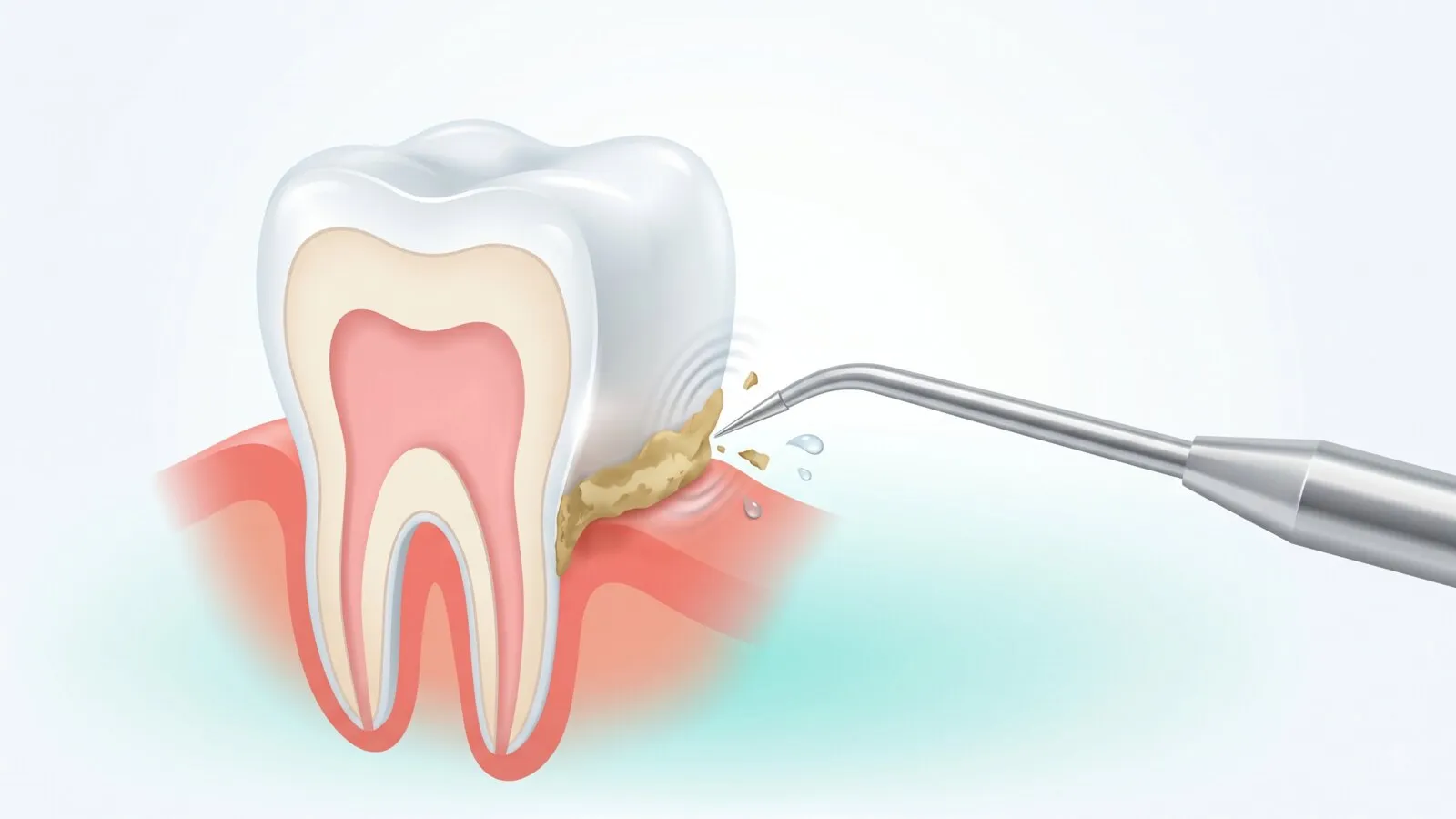
In short: gum disease is a chronic inflammation, and inflammation does not stay in the mouth. Research links periodontal disease with heart disease, poorly controlled diabetes, pregnancy complications and respiratory infection. The relationship runs both ways with diabetes in particular. Treating your gums is not only about keeping teeth — it is one of the cheaper things you can do for general health.
Most people think of their mouth as separate from the rest of their body. You see a dentist for teeth, a doctor for everything else. But decades of research have made one thing clear: your oral health and your overall health are deeply connected. What happens in your mouth does not stay in your mouth.
How Does Oral Health Affect the Rest of the Body?
Your mouth is home to more than 700 identified species of bacteria. Most are harmless, and many are actively useful. But when oral hygiene breaks down, harmful species multiply and can cause gum disease, a chronic inflammatory condition on a scale most people underestimate: the World Health Organization estimates severe periodontal disease affects around a billion people worldwide — close to a fifth of all adults — and calls it a leading cause of tooth loss. It is that inflammation, and the bacteria driving it, that creates problems well beyond your gums.
Is Gum Disease Linked to Heart Disease?
People with moderate to severe gum disease have a significantly higher risk of cardiovascular disease. The connection works through two pathways:
- Bacterial spread: Oral bacteria can enter the bloodstream through inflamed gum tissue and attach to fatty plaques in arteries, contributing to blockages.
- Chronic inflammation: The inflammatory chemicals produced by gum disease circulate throughout the body and can damage blood vessel walls over time.
This does not mean gum disease directly causes heart attacks, but it is an independent risk factor that compounds other risks like high blood pressure and high cholesterol. An umbrella review published in 2024 — a review of the systematic reviews, which is the level of evidence that best answers "is this finding real or is it one noisy study" — found the association between periodontal disease and cardiovascular disease consistent across the reviews it pooled, while noting that almost all of the underlying work is observational. A separate meta-analysis found periodontitis associated with higher blood pressure, with the association strongest in severe disease.
What none of that establishes is cause. People with untreated gum disease differ from people without it in diet, smoking, income and access to care, and every one of those also affects the heart. The reasonable conclusion is the modest one: treating your gums is worth doing, and it is not a substitute for treating your blood pressure.
How Are Diabetes and Gum Disease Connected?
The relationship between diabetes and gum disease is uniquely bidirectional. Diabetes reduces the body's ability to fight infection, making gum disease more likely and harder to control. At the same time, severe gum disease can make blood sugar more difficult to regulate, worsening diabetic complications.
This is one of the better-evidenced findings in the field rather than a plausible association. A 2022 Cochrane review concluded, with moderate-certainty evidence, that treating periodontitis improves blood sugar control by a clinically meaningful amount in people who have both conditions, with the reduction in HbA1c measurable at three to four months and still present at six and twelve. A separate systematic review and meta-analysis put the average reduction in HbA1c after periodontal treatment at a little over a third of a percentage point at three months — small on its own, comparable to adding a second oral medication, and free of that medication's side effects. That matters especially here: diabetes is common in Pakistan and gum disease is often the part of it nobody is treating. If you are diabetic, diligent oral care is not optional; it is part of managing the condition.
Can Gum Disease Affect Pregnancy?
Pregnant women with untreated gum disease face a higher risk of preterm birth and low birth weight. The inflammatory response triggered by periodontal disease may interfere with fetal development. This is why dental check-ups during pregnancy are not just safe; they are recommended.
Can Oral Bacteria Cause Respiratory Infections?
Bacteria from the mouth can be inhaled into the lungs, particularly in elderly or immunocompromised people, and poor oral hygiene has been linked to a higher risk of pneumonia in hospital and nursing-home settings.
Here the evidence is weaker than the claim usually made for it, and it is worth saying so. A Cochrane review of oral-care measures for preventing nursing-home-acquired pneumonia found the trials small, few and at risk of bias, and concluded the evidence was insufficient to say whether any particular oral-care regimen prevents pneumonia. The biological link is plausible and the intervention is harmless; the proof that it works is not yet there. Keeping a dependent relative's mouth clean is still worth doing — for their comfort and their ability to eat, which are not in doubt.
Why Does Gum Inflammation Affect the Whole Body?
Chronic gum disease keeps the immune system in a state of low-grade activation. The body produces inflammatory markers, including C-reactive protein, interleukin-6, and others, that circulate systemically. Over time, this persistent inflammation is associated with:
- Increased risk of rheumatoid arthritis
- Worsening of kidney disease
- Potential links to certain cancers, including pancreatic cancer
- Cognitive decline and an emerging connection to Alzheimer's disease
How Are Mental Health and Oral Health Related?
The connection is not purely physical. Dental problems can profoundly affect mental well-being. Chronic tooth pain disrupts sleep, concentration, and daily functioning. Missing or damaged teeth can cause embarrassment that leads people to withdraw socially, avoid smiling, and experience reduced self-esteem. Conversely, depression and anxiety can lead to neglected oral care, creating a cycle that worsens both conditions.
What Does Losing Teeth Actually Cost You?
The systemic-disease headlines get the attention, but the effect with the strongest and least disputed evidence behind it is the plainest one. A systematic review and meta-analysis of periodontitis and oral-health-related quality of life found a consistent, measurable reduction in quality of life across studies — worse in more severe disease. A separate review of tooth loss found the same relationship: the more teeth a person has lost, and the further forward those teeth are, the worse they report their daily life to be.
That is measured in eating, sleeping, speaking and being willing to smile in front of other people. It does not need a link to the heart to be worth preventing.
What Does This Mean in Lahore?
Two things about this city change how the advice above should be read. The first is diabetes. A meta-analysis of cross-sectional surveys of Pakistani adults put the prevalence of type 2 diabetes at roughly one adult in nine, and in a Lahore waiting room the odds that a middle-aged patient with advanced gum disease also has unmanaged blood sugar are high enough that we ask about it routinely. The bidirectional link means those two conditions make each other worse, and the person treating one often does not know about the other.
The second is that gum disease is quiet. It does not hurt until late. Patients in Johar Town come in for a broken tooth or a cosmetic question and leave with a periodontal diagnosis they had no symptoms of — which is the ordinary case, not an unusual one, and the reason a check-up is worth keeping even when nothing hurts.
If you have diabetes, heart disease or a pregnancy in progress, say so at the first appointment. It changes what we look for, not just how we treat.
What Can You Do to Protect Both?
The practical takeaway is straightforward:
- Brush twice daily with fluoride toothpaste and floss once daily to control bacterial buildup.
- Do not ignore bleeding gums. Gums that bleed when you brush or floss are inflamed, not merely "sensitive", and need attention. Thorough cleaning and better home care resolve most early cases; where X-rays show bone loss, teeth are loosening or drifting, or cleaning has not worked, that is the point at which a periodontist's assessment is worth seeking.
- Keep your dental appointments. Professional cleanings remove tartar that brushing alone cannot.
- Tell your dentist about your medical history. Conditions like diabetes, heart disease, and pregnancy affect how we approach your dental care.
- Tell your physician about your dental health. Your doctor should know if you have been diagnosed with gum disease.
Taking care of your mouth is not a cosmetic luxury. It is a meaningful investment in your long-term health. The evidence is strong enough that ignoring oral health means ignoring a real and modifiable risk factor for serious disease. Regular professional cleanings and check-ups are the simplest place to start — book yours here.
Sources
- Arbildo-Vega HI, Cruzado-Oliva FH, Coronel-Zubiate FT, Meza-Málaga JM, Luján-Valencia SA, Luján-Urviola E, et al. Periodontal disease and cardiovascular disease: umbrella review. BMC Oral Health. 2024;24(1):1308 — a review of systematic reviews; the underlying studies are observational.
- Muñoz Aguilera E, Suvan J, Buti J, Czesnikiewicz-Guzik M, Barbosa Ribeiro A, Orlandi M, et al. Periodontitis is associated with hypertension: a systematic review and meta-analysis. Cardiovascular Research. 2020;116(1):28–39.
- Baeza M, Morales A, Cisterna C, Cavalla F, Jara G, Isamitt Y, et al. Effect of periodontal treatment in patients with periodontitis and diabetes: systematic review and meta-analysis. Journal of Applied Oral Science. 2020;28:e20190248.
- Liu C, Cao Y, Lin J, Ng L, Needleman I, Walsh T, et al. Oral care measures for preventing nursing home-acquired pneumonia. Cochrane Database of Systematic Reviews. 2018;9(9):CD012416 — the evidence was judged insufficient to favour any particular regimen.
- Agnese CCD, Schöffer C, Kantorski KZ, Zanatta FB, Susin C, Antoniazzi RP. Periodontitis and Oral Health-Related Quality of Life: A Systematic Review and Meta-Analysis. Journal of Clinical Periodontology. 2025;52(3):408–420.
- Gerritsen AE, Allen PF, Witter DJ, Bronkhorst EM, Creugers NH. Tooth loss and oral health-related quality of life: a systematic review and meta-analysis. Health and Quality of Life Outcomes. 2010;8:126.
- Montoya-Carralero JM, Ávila-Villasmil R, Sánchez-Pérez A, Jornet-García A, Terrer-Alonso E, Moya-Villaescusa MJ. Relationship between periodontal disease and preterm birth. A systematic review and meta-analysis. Medicina Oral Patología Oral y Cirugia Bucal. 2024;29(6):e857–e865.
- Adnan M, Aasim M. Prevalence of Type 2 Diabetes Mellitus in Adult Population of Pakistan: A Meta-Analysis of Prospective Cross-Sectional Surveys. Annals of Global Health. 2020;86(1):7 — the source for the prevalence figure in the Lahore section above.