In short: cosmetic dentistry has moved toward removing less of the tooth and taking less of your time. Digital scanning and design let you preview a result before committing, same-day milling can produce a crown in one visit, and modern bonding and thinner veneers achieve changes that once required grinding a tooth down. Not every technique suits every case.
Cosmetic dentistry has changed dramatically in recent years. Treatments that once required multiple appointments, temporary restorations, and significant recovery time can now be completed faster, more precisely, and with less discomfort than ever before. Here is a look at the advances that are making the biggest difference for patients.
What Is Digital Smile Design?
Before any work begins, digital smile design allows your dentist to create a detailed preview of your results. Using high-resolution photos and specialized software, we can map your facial proportions, lip line, and gum architecture to design a smile that suits your unique features. You get to see and approve the outcome before a single tooth is touched. This technology has eliminated much of the guesswork that once made cosmetic decisions stressful for patients.
How Is 3D Printing Used in Dentistry?
3D printing has moved from novelty to everyday clinical tool. Dental labs and many practices now use 3D printers to produce:
- Surgical guides for precise implant placement
- Custom temporary restorations while permanent work is fabricated
- Models for clear aligner treatment, printed for each stage of tooth movement
- Night guards and retainers with exact fit
The result is faster turnaround times, better accuracy, and lower costs compared to traditional manufacturing methods.
Can You Get a Crown in One Day?
Traditional crowns required two appointments: one to prepare the tooth and take impressions, then a return visit weeks later to place the permanent crown. CEREC (Chairside Economical Restoration of Esthetic Ceramics) changes that entirely. Your dentist scans the prepared tooth with a digital camera, designs the crown on screen, and mills it from a ceramic block right in the office. The entire process, from preparation to cemented crown, takes about two hours in a single visit.
These restorations are made from high-quality ceramic that closely matches natural tooth color and strength. For many patients, eliminating the second appointment and the temporary crown is reason enough to prefer this approach.
What Is Laser Dentistry Used For?
Dental lasers have expanded what can be done comfortably and minimally invasively:
- Gum reshaping: Lasers can sculpt the gum line with precision, correcting a "gummy smile" with minimal bleeding and faster healing than traditional surgery.
- Cavity treatment: Some small, early cavities can be prepared with a laser rather than a drill, sometimes without an injection. The limits are real — larger cavities, deep decay and old fillings still need conventional preparation.
- Teeth whitening acceleration: Laser-activated whitening can enhance results during in-office bleaching sessions.
- Soft tissue procedures: Tongue-tie release, biopsy, and lesion removal are all faster and more comfortable with laser technology.
Are There Veneers That Do Not Remove Enamel?
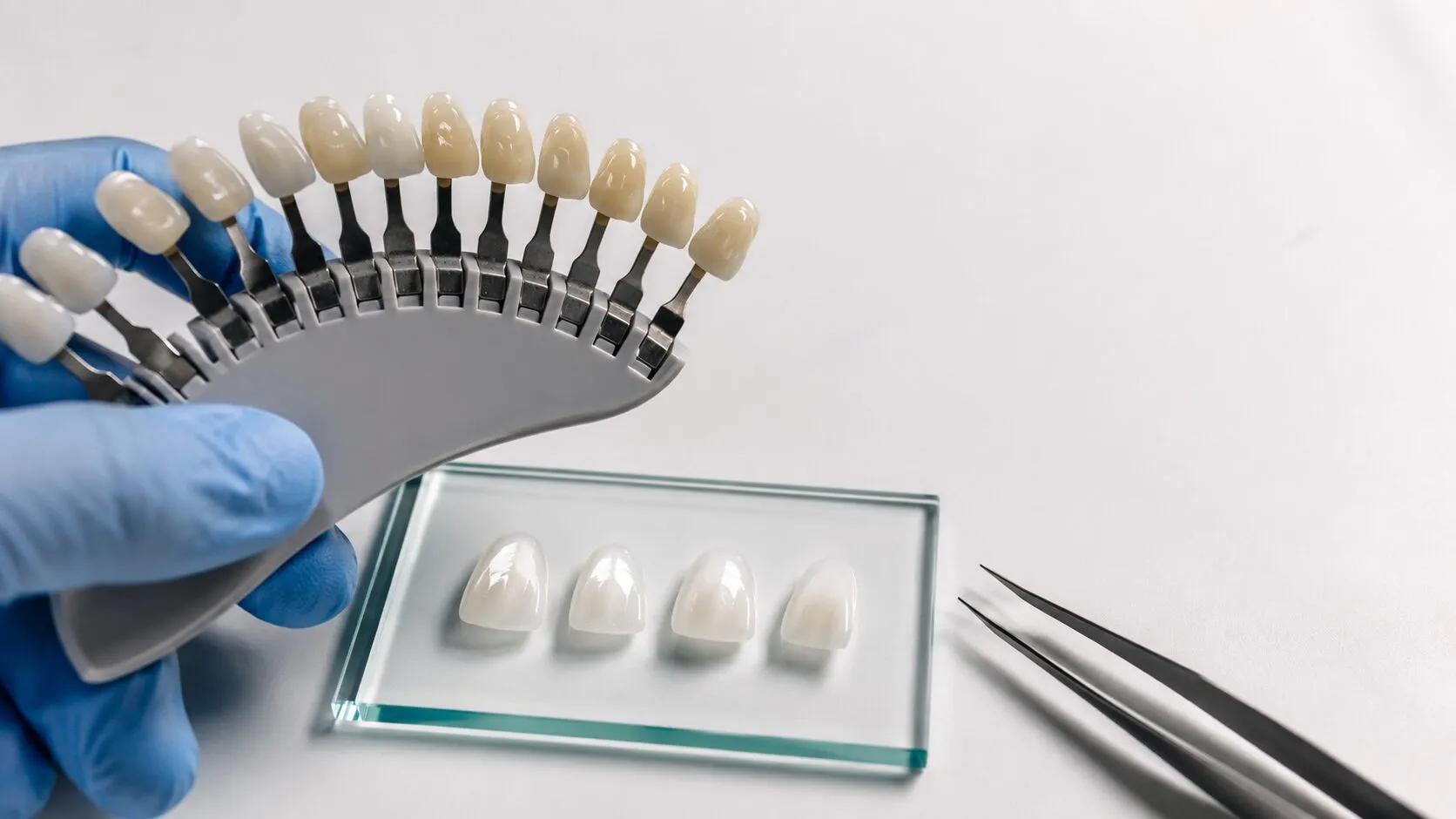
Traditional porcelain veneers required removing a visible layer of enamel from the front of each tooth. Modern ultra-thin veneers, sometimes as thin as 0.3mm, can be bonded with little or no tooth preparation in suitable cases, which preserves healthy tooth structure and keeps future options open.
One correction worth making, because it is often oversold: "no-prep" is not the same as reversible. Even where no enamel is removed, the tooth surface is etched to hold the bond, and taking a veneer off later leaves a tooth that needs re-veneering or restoring rather than one that simply returns to how it was. Treat it as a long-term commitment made with less tooth loss, not as a temporary change. Candidacy is genuinely limited, too — where teeth are already prominent or the bite is heavy, adding thickness to the front surface makes them look bulky, and conventional preparation gives the better result.
How Has Teeth Whitening Improved?
Professional whitening has become both more effective and gentler on teeth. Newer peroxide formulations include desensitizing agents like potassium nitrate and fluoride that significantly reduce the sensitivity that once made whitening uncomfortable for many patients. In-office treatments using controlled light activation can lighten teeth by several shades in a single session, and custom take-home trays allow patients to maintain results on their own schedule.
What Can Composite Bonding Fix?
Composite resin materials have improved substantially, with better colour matching, greater strength and better polish retention than earlier generations. Skilled dentists use direct composite bonding to repair chips, close small gaps and reshape teeth in a single appointment, at considerably less cost than porcelain. The honest trade-off is longevity: composite stains and chips over the years in a way porcelain does not, so it is repairable and replaceable rather than permanent. For patients who want a meaningful improvement without committing to veneers, that is often an advantage rather than a drawback — bonding is the reversible place to start.
Which of These Are Actually Available in Lahore?
Worth saying plainly, because articles on this subject are usually written for American readers and quietly imply that everything is on offer everywhere. It is not. Photograph-based smile planning, modern composite bonding, professional whitening and thin veneers are widely available across Lahore. Chairside milling that produces a crown in one visit, in-practice 3D printing and dental lasers exist here but are far from universal — a clinic that has them will normally tell you. Aligners and guided surgical stents are usually made by an external laboratory rather than in the building, which is perfectly normal and mainly affects how long you wait between appointments.
So the useful question is not "do you use the latest technology?", to which every clinic answers yes. It is: what exactly will you use for my case, and what changes if you do not have it? A dentist who can answer that in plain language is telling you how they plan treatment, whatever equipment happens to be in the room.
How Do You Choose the Right Cosmetic Approach?
With so many options available, the best cosmetic treatment is the one that matches your goals, your budget, and your dental situation. A thorough consultation that includes a frank discussion of what each option can and cannot achieve is the first step toward a result you will be happy with for years to come. You can read more about the treatments we offer on our cosmetic dentistry page, or book a consultation to talk through your options.