If you have been searching for the dental implant cost in Lahore, you have probably noticed something frustrating: nobody gives you a straight number. There is a good reason for that: an implant is a surgical treatment planned around your jaw, your bone, and your bite — so the honest answer genuinely is "it depends." What we can do is explain exactly what it depends on, what a proper quote must include, and how to compare quotes without being misled. That knowledge is worth more than any number you will find online.
Why Do Implant Quotes Differ So Much?
Two patients can walk into the same clinic and leave with very different treatment plans. Here are the factors that actually move the total.
How many teeth you are replacing
A single missing tooth needs one implant and one crown. Several missing teeth in a row can often be replaced with two implants carrying a fixed bridge — you do not always need one implant per tooth. A full arch — usually four to six implants supporting a complete set of fixed teeth — is a different undertaking altogether. Each is planned, priced, and staged differently, which is why a friend's quote tells you very little about yours.
The three components people forget
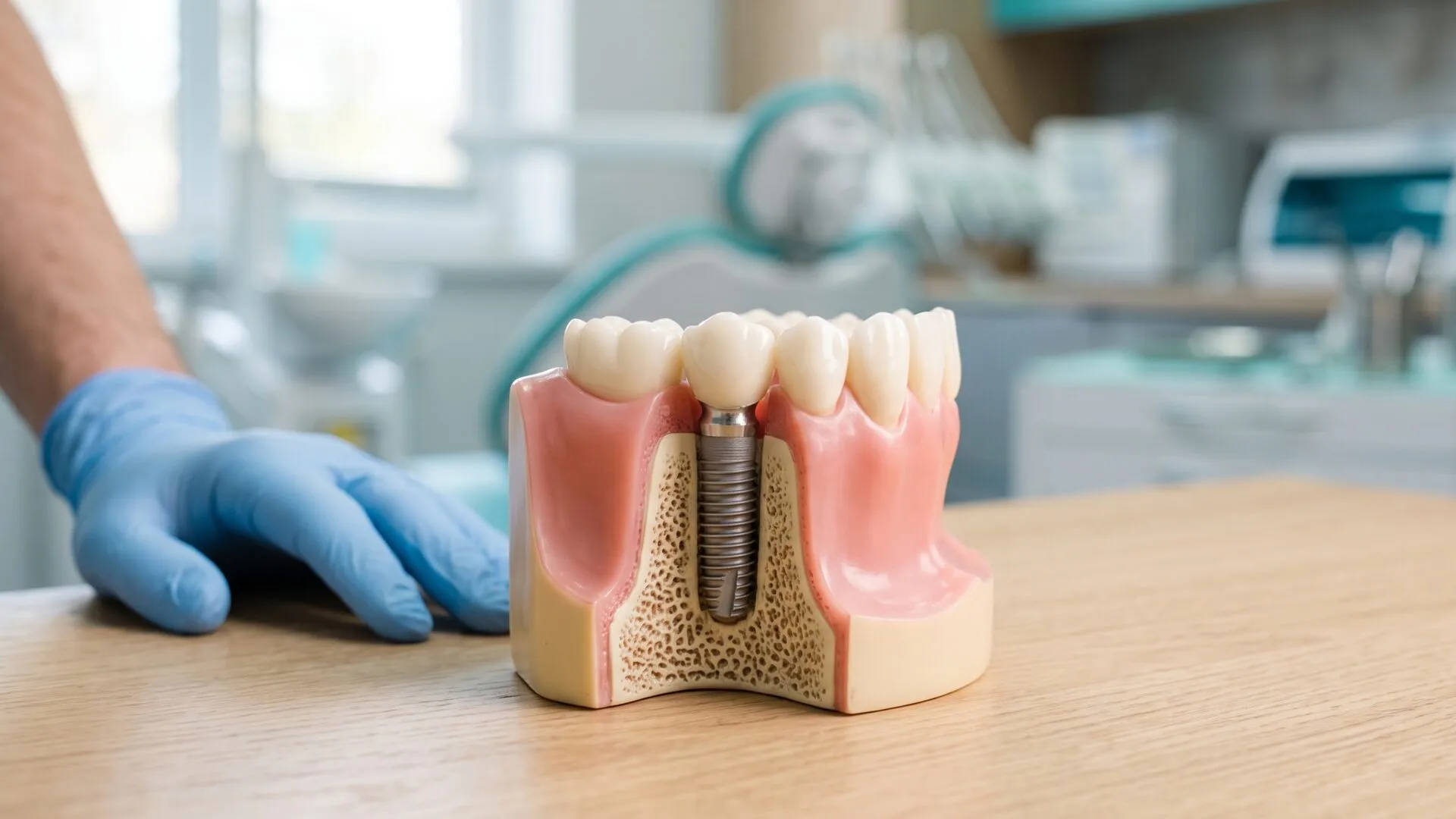
A finished implant tooth is not one item — it is three:
- The implant fixture — the titanium post placed into the jawbone, which fuses with your bone over 3–6 months in a process called osseointegration.
- The abutment — the connector that joins the implant to the visible tooth.
- The crown — the tooth you actually see and chew with. Crown material matters too: porcelain and zirconia options differ in strength, appearance, and cost.
A quote that covers only the fixture is not a quote for a tooth — it is a quote for a piece of metal in your jaw. Always confirm all three components are included, and which crown material the figure assumes.
Your bone
An implant needs enough healthy jawbone to hold it. If a tooth has been missing for years, the bone underneath has usually shrunk. Bone grafting can rebuild it, and the upper back jaw may need a sinus lift — but each adds a surgical stage and months of healing. This is the most common reason two quotes for "one implant" differ: one patient needs grafting and the other does not. No one can tell you whether you need it without a scan.
The implant brand and system
Here is an honest truth: cheaper, unbranded implant systems exist, and they are one of the main reasons some quotes look surprisingly low. Established systems are backed by decades of research and — just as importantly — long-term spare-part availability. An implant can last a lifetime, but the crown typically needs replacing after 10–20 years. If your implant came from a system nobody stocks anymore, replacing that crown, or an abutment screw, becomes a genuine problem. Ask which system is being used, and whether its parts will still be available in fifteen years.
Who places it
Implant placement near nerves and sinuses is surgery, and training varies enormously — from oral and maxillofacial surgeons with years of hospital-based specialist training to general dentists who attended a short weekend course. We say this carefully, not smugly: many general dentists place straightforward implants well, and which implant cases call for a surgeon turns on the bone, the site and the complexity rather than the job title. Published long-term survival is high — a 2019 systematic review and meta-analysis in the Journal of Dentistry put ten-year implant survival at 96.4% — and the surgeon's training is a legitimate reason for quotes to differ.
Aftercare and follow-up
Good implant treatment does not end at surgery. Healing reviews during osseointegration, adjustments after the crown is fitted, and ongoing hygiene visits all protect your investment. Ask whether follow-ups are included in the quote or billed separately — it changes the real total.
How Do You Compare Implant Quotes Safely?
Once you have quotes in hand, look past the headline figure.
Red flags
- A quote given without an X-ray or 3D scan. Nobody can plan an implant without seeing your bone. A figure quoted over the phone is a guess.
- An "all-inclusive" price that quietly excludes the crown. This is the most common trick. Confirm fixture, abutment, and crown in writing.
- No mention of grafting. If a quote does not address whether you might need bone grafting, the plan is incomplete — and the surprise arrives mid-treatment.
Questions to ask every clinic
- Which implant system are you using, and will its parts be available years from now?
- What exactly does this figure include — and what could be added later?
- Who will actually place the implant, and what is their surgical training?
- What happens if the implant fails to integrate — is there a warranty or redo policy?
A good clinic will answer all four without flinching.
Implant, Bridge or Denture — Which Lasts Longest?
The fair comparison is not what each option costs today, but what it costs over decades. A bridge requires grinding down the two healthy teeth beside the gap, and typically needs replacement after 10–15 years — so you may pay for it more than once, having sacrificed two good teeth. A denture needs periodic relining and eventual remaking as the jaw changes shape beneath it. An implant is the only option that replaces the tooth root itself — and so the only one that protects the jawbone from shrinking. Bridges and dentures are sometimes the right call — we offer both through our restorative dentistry service — but judged over a lifetime of chewing, an implant is usually the better value, not merely the bigger purchase.
Who Should Not Rush Into Implants?
An honest cost conversation includes who should wait. Smoking restricts blood flow to healing bone and measurably raises failure rates — we will ask you to stop or cut down heavily around surgery. Uncontrolled diabetes impairs healing, so we may ask you to stabilise your blood sugar with your physician first. And if your bone is insufficient, the right answer is grafting first, not forcing an implant into inadequate bone. Paying for an implant that fails is the most expensive option of all — which is why candidacy comes before quoting. Read more about who implants suit on our dental implants page.
How Do We Handle Implant Cost at Happy Tooth?
At our clinic in Johar Town, every implant is placed by Dr. Sharjeel Saddiqi, BDS, FCPS Trained in Oral & Maxillofacial Surgery, an oral and maxillofacial surgeon with 18+ years of experience. The process is simple: an assessment with digital X-rays first, then a written estimate covering everything — fixture, abutment, crown, and any grafting — confirmed with you before treatment begins. No figure is quoted before we have seen your bone, because that would be guessing with your money. Since 2020, we have treated more than 5,000 patients and hold a 5.0/5 rating across 36 Google reviews, with evening hours (Mon–Sat, 3–9 PM) so consultations fit around work. Book your implant assessment or message us on WhatsApp at +92 333 6333643 — and leave with a plan you can genuinely compare.
For the same breakdown across every treatment we provide — and how to compare two quotes without being caught by the cheaper one that leaves a stage out — see our guide to what dental treatment costs in Lahore.
What Does the Evidence Say an Implant Buys You?
An implant is the most expensive single thing most patients ever buy from a dentist, so the outcome data is worth reading before the quote.
Survival is high, and "survival" is a specific word. A systematic review with sensitivity meta-analysis of ten-year data found implant survival above 90%, and a review of implant-supported fixed prostheses observed for at least five years reported high survival with a meaningful rate of technical complications alongside it — chipped ceramic, loosened screws, replaced components. Survival counts the implant still being in the jaw. It does not promise that nothing needed fixing on the way.
Peri-implantitis is the risk nobody quotes for. Systematic reviews put the prevalence of peri-implantitis — inflammation with bone loss around an implant — in the high single figures to around a fifth of implants, depending on the definition applied and how long they have been in place. A more recent review using the current world-workshop criteria reports the same picture. It is treatable, and it is far easier to prevent than to reverse.
Which is why maintenance is part of the price. A systematic review and meta-analysis of prevention concluded that regular professional maintenance and good home cleaning are what keep the tissue around an implant healthy. If a quote does not mention reviews and hygiene visits, that cost has not gone away; it has just not been mentioned.
Ask two questions of any implant quote: what happens if the implant fails, and what the follow-up schedule is. A clinic that has thought about both will answer immediately.
Sources
- Howe MS, Keys W, Richards D. Long-term (10-year) dental implant survival: A systematic review and sensitivity meta-analysis. Journal of Dentistry. 2019;84:9–21.
- Pjetursson BE, Thoma D, Jung R, Zwahlen M, Zembic A. A systematic review of the survival and complication rates of implant-supported fixed dental prostheses (FDPs) after a mean observation period of at least 5 years. Clinical Oral Implants Research. 2012;23 Suppl 6:22–38.
- Diaz P, Gonzalo E, Villagra LJG, Miegimolle B, Suarez MJ. What is the prevalence of peri-implantitis? A systematic review and meta-analysis. BMC Oral Health. 2022;22(1):449.
- Reis INRD, Huamán-Mendoza AA, Ramadan D, Honório HM, Naenni N, Romito GA, et al. The prevalence of peri-implant mucositis and peri-implantitis based on the world workshop criteria: A systematic review and meta-analysis. Journal of Dentistry. 2025;160:105914.
- Carra MC, Blanc-Sylvestre N, Courtet A, Bouchard P. Primordial and primary prevention of peri-implant diseases: A systematic review and meta-analysis. Journal of Clinical Periodontology. 2023;50(Suppl 26):77–112.
- Thoma DS, Sailer I, Ioannidis A, Zwahlen M, Makarov N, Pjetursson BE. A systematic review of the survival and complication rates of resin-bonded fixed dental prostheses after a mean observation period of at least 5 years. Clinical Oral Implants Research. 2017;28(11):1421–1432 — the main alternative to an implant for a single missing tooth, so its numbers are the comparison.