"How much do braces cost in Lahore?" is one of the most common questions we get on WhatsApp, and the honest answer is the one nobody enjoys hearing: it depends. Not because clinics are being evasive, but because orthodontic treatment is genuinely individual — the same crowded front teeth can need a short course of aligners in one mouth and two years of fixed braces with extractions in another. Any figure quoted before an orthodontist has actually examined you is a guess, and often not a useful one.
What we can do is explain exactly what drives the difference, so you can read any quote intelligently, compare clinics fairly, and spot what's been quietly left out.
What Determines Your Braces Treatment Plan and Its Cost?
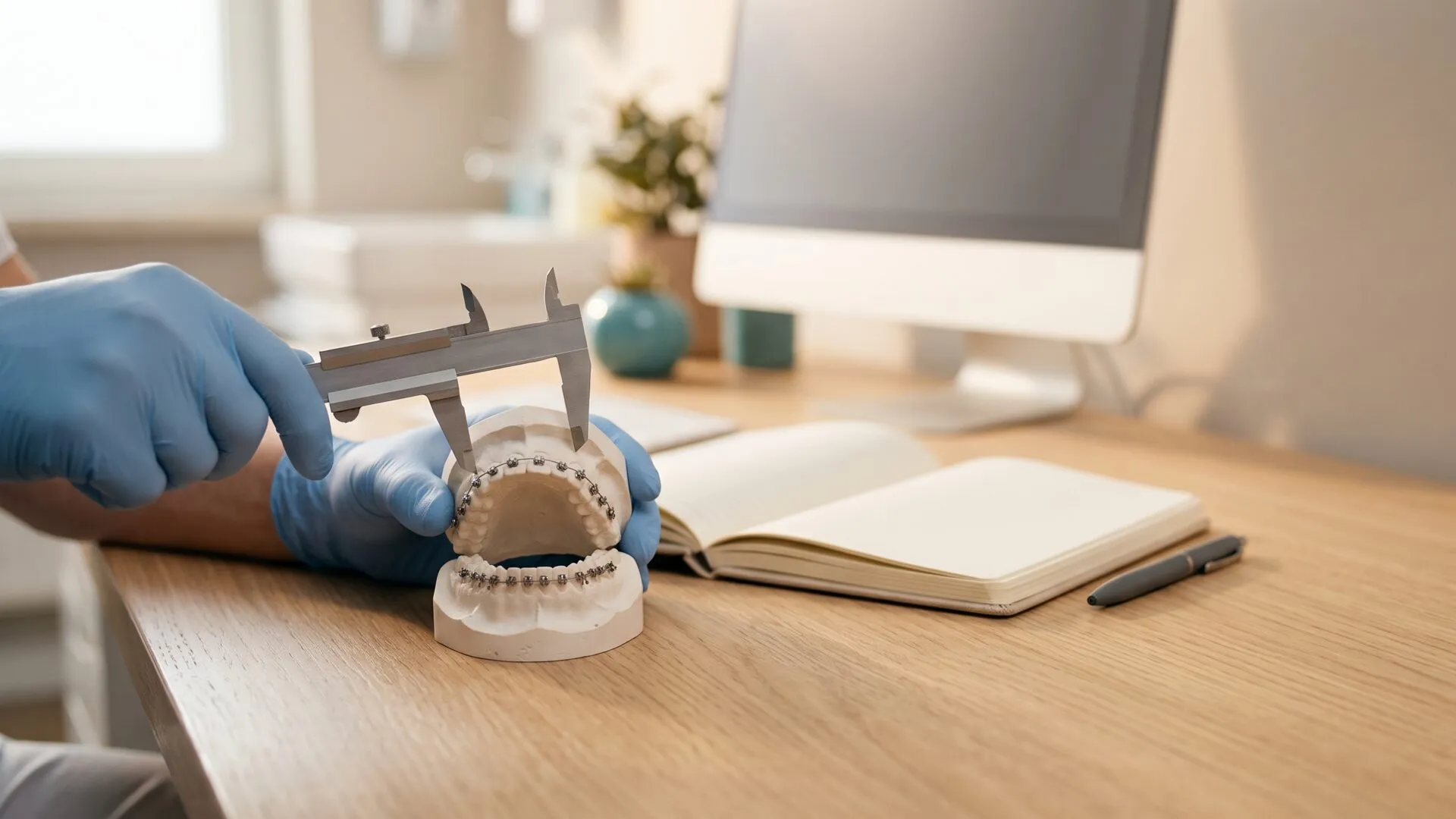
The appliance: metal braces, ceramic braces, or clear aligners
Traditional metal braces are the workhorse of orthodontics and generally the most economical option — they handle the widest range of problems and work around the clock because they're fixed to your teeth. Ceramic braces use the same mechanics with tooth-coloured brackets that blend in from a distance; the brackets cost more to make, are a little more fragile, and their clear ties can stain if you drink a lot of tea or coffee, so they sit a step above metal. Clear aligners are usually at the higher end, and here's why: you're paying for a series of custom-made trays, changed every 1–2 weeks. A mild case needs a handful of trays over a few months; a complex one can need dozens across up to 24 months — more trays, more lab work, more cost. Aligners are nearly invisible and let you eat and brush normally, but they only work if worn 20–22 hours a day, every day. If that discipline isn't realistic for you, they're an expensive way to get a slow result.
How complex your case is
Mild crowding of the front teeth is the simplest end of orthodontics. Correcting a deep overbite, an underbite, or severely rotated teeth is a different scale of work — it needs finer control, sometimes elastics or attachments, and more of the orthodontist's time. Extraction cases, where teeth are removed to create space, add a surgical step and typically extend treatment. Two patients can walk in with what looks like "the same" crooked smile and leave with very different plans, because what matters is underneath: the bite, the jaw, and the space available.
How long your treatment runs
Braces typically take 12–36 months and aligners 6–24 months, depending on complexity. That range isn't padding — it directly affects cost, because fixed braces need adjustment visits roughly every 4–6 weeks, and a 30-month case involves far more chair time, materials, and supervision than a 14-month one. Be wary of anyone promising a dramatically shorter timeline than everyone else; teeth move at the pace biology allows.
Your age
Teenagers are the classic window — the jaw is still growing and teeth move efficiently. Adult orthodontics is completely routine now, but adult cases sometimes run longer, and we first make sure the gums and bone are healthy enough to support tooth movement, which can mean some groundwork before braces go on. Children around age 7 sometimes benefit from early screening that makes later treatment shorter and simpler.
What happens after: retainers are part of the real cost
This is the part patients least expect. When active treatment ends, teeth spend months trying to drift back toward their old positions — and they keep drifting slowly for life. Retainers, worn at night indefinitely after an initial full-time period, protect the result you spent one to three years earning. They're not an optional accessory; they're the final phase of treatment, and an honest plan accounts for them from day one.
The extras a complete quote should include
- Records: X-rays, photos, and impressions or scans taken before planning.
- All adjustment visits: not a headline figure with a separate charge every 4–6 weeks.
- Repairs: brackets do occasionally break — ask whether rebonding is covered.
- Retainers: included, or an extra bill on your happiest appointment?
- Emergency visits: a poking wire shouldn't come with a surprise fee.
Why Can the Cheapest Braces Quote Mislead?
A low headline figure is easy to produce: quote only for fitting the braces, and leave the X-rays, monthly adjustments, repairs, and retainers as separate charges that appear over the following two years. By the end, the "cheap" option has often cost more than the transparent one — just in instalments you couldn't see coming.
The other thing a bargain quote can hide is supervision. The judgement calls in orthodontics — whether to extract, when a bite is truly finished, when a case is going off track — are where training shows, and none of them are visible in a price. Which orthodontic cases genuinely warrant a specialist is worth understanding before you compare quotes. Ask who will actually plan and supervise your case, and how often they'll see you.
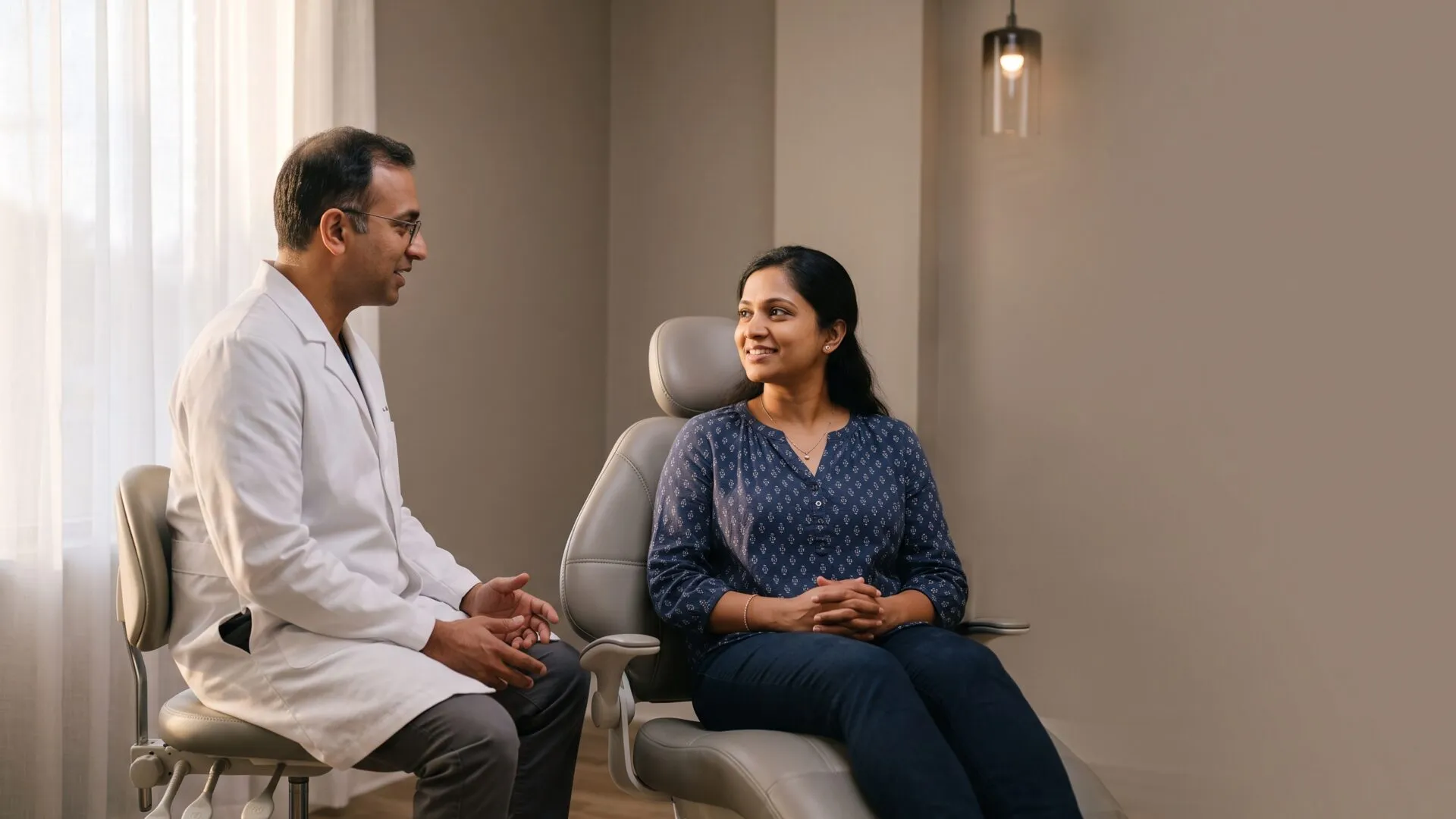
What Happens at a Proper Orthodontic Consultation?
A good consultation follows a predictable shape, and it happens before you commit to anything:
- Records: the orthodontist examines your teeth and bite, and takes X-rays, photos, and impressions or a scan.
- An individual plan: your options — often more than one — with a realistic timeline for each, and a plain explanation of the trade-offs.
- A written estimate for the whole journey: from records to retainers, on paper, before any decision is made.
Questions worth asking at any clinic: Who plans and supervises my case, and what is their qualification? What exactly does this estimate include? What happens if a bracket breaks or treatment runs longer than planned? Are retainers included, and what wear schedule should I expect afterwards?
When Might You Not Need Braces at All?
Sometimes the honest answer to "how much will braces cost me?" is "you may not need them." A slightly chipped front tooth, minor edge irregularities, or teeth that look uneven mainly because of staining are often better solved with cosmetic dentistry — bonding, contouring, or whitening — in a fraction of the time and commitment. A trustworthy orthodontist will tell you when a simpler option gets you the smile you want, even though it means less work for them.
How Do We Approach Braces Cost at Happy Tooth?
Orthodontics at our clinic is led by Dr. Arfa Ahmad (BDS, MDS Trained in Orthodontics), who has 13+ years of experience, is certified in clear aligner therapy, and has straightened more than 1,000 smiles. She plans every case individually — no template timelines, no one-size-fits-all quotes — and you'll leave your consultation with a written treatment plan and estimate covering the whole journey, retainers included, before you commit to anything. Since Dr. Manahil Iftikhar founded the clinic in 2020, that plain-dealing approach has earned us a 5.0/5 rating across 36 Google reviews, and our evening hours (Mon–Sat, 3–9 PM) mean adjustment visits fit around school and office instead of interrupting them. Read more about our orthodontic treatments, book a consultation at our Johar Town clinic, or message us on WhatsApp at +92 333 6333643 — we'll tell you what your smile actually needs, in writing.
For the same breakdown across every treatment we provide — and how to compare two quotes without being caught by the cheaper one that leaves a stage out — see our guide to what dental treatment costs in Lahore.
What Does the Evidence Say About Braces Themselves?
Three findings are worth knowing before you compare quotes, because each one changes what you should be asking for.
Aligners are not simply a faster version of braces. A systematic review with meta-analyses comparing aligners against fixed appliances found aligners performed less well on several occlusal outcomes, while treatment time varied with how crowded the case was rather than with the appliance alone. A separate review of crowding cases found duration differences that depended on the severity treated. So "aligners are quicker" is a claim about a particular case, not about the technology.
Retainers are part of the treatment, not an accessory. A Cochrane review of retention procedures after orthodontic treatment found the evidence on which retainer is best to be limited, but the underlying fact is not in dispute: teeth move back when nothing holds them. A quote that leaves retainers out is not cheaper — it is incomplete, and the cost surfaces later as a relapse.
Two risks are real and both are manageable. White spot lesions — chalky marks where plaque sat around a bracket — are common enough that a systematic review and meta-analysis exists on their prevalence, and a separate review found fluoride varnish during treatment reduces them. Root resorption, a shortening of the root, is described in an overview of systematic reviews as usually minor and clinically unimportant, but it is why an orthodontist takes X-rays during treatment and not only at the start.
None of this argues against braces. It argues for asking what a quote includes, and how the person quoting plans to manage those two risks.
Sources
- Papageorgiou SN, Koletsi D, Iliadi A, Peltomaki T, Eliades T. Treatment outcome with orthodontic aligners and fixed appliances: a systematic review with meta-analyses. European Journal of Orthodontics. 2020;42(3):331–343.
- Alhamwi AM, Burhan AS, Idris MI, Nawaya FR. Duration of orthodontic treatment with clear aligners versus fixed appliances in crowding cases: a systematic review. Clinical Oral Investigations. 2024;28(5):249.
- Martin C, Littlewood SJ, Millett DT, Doubleday B, Bearn D, Worthington HV. Retention procedures for stabilising tooth position after treatment with orthodontic braces. Cochrane Database of Systematic Reviews. 2023;5(5):CD002283.
- Hussain U, Wahab A, Kamran MA, Alnazeh AA, Almoammar S, Alshahrani SSM, et al. Prevalence, Incidence and Risk Factors of White Spot Lesions Associated With Orthodontic Treatment - A Systematic Review and Meta-Analysis. Orthodontics and Craniofacial Research. 2025;28(2):379–399.
- Sonesson M, Twetman S. Prevention of white spot lesions with fluoride varnish during orthodontic treatment with fixed appliances: a systematic review. European Journal of Orthodontics. 2023;45(5):485–490.
- Yassir YA, McIntyre GT, Bearn DR. Orthodontic treatment and root resorption: an overview of systematic reviews. European Journal of Orthodontics. 2021;43(4):442–456.